Skip to content


How Do You Make Storage Look Part of the Room?
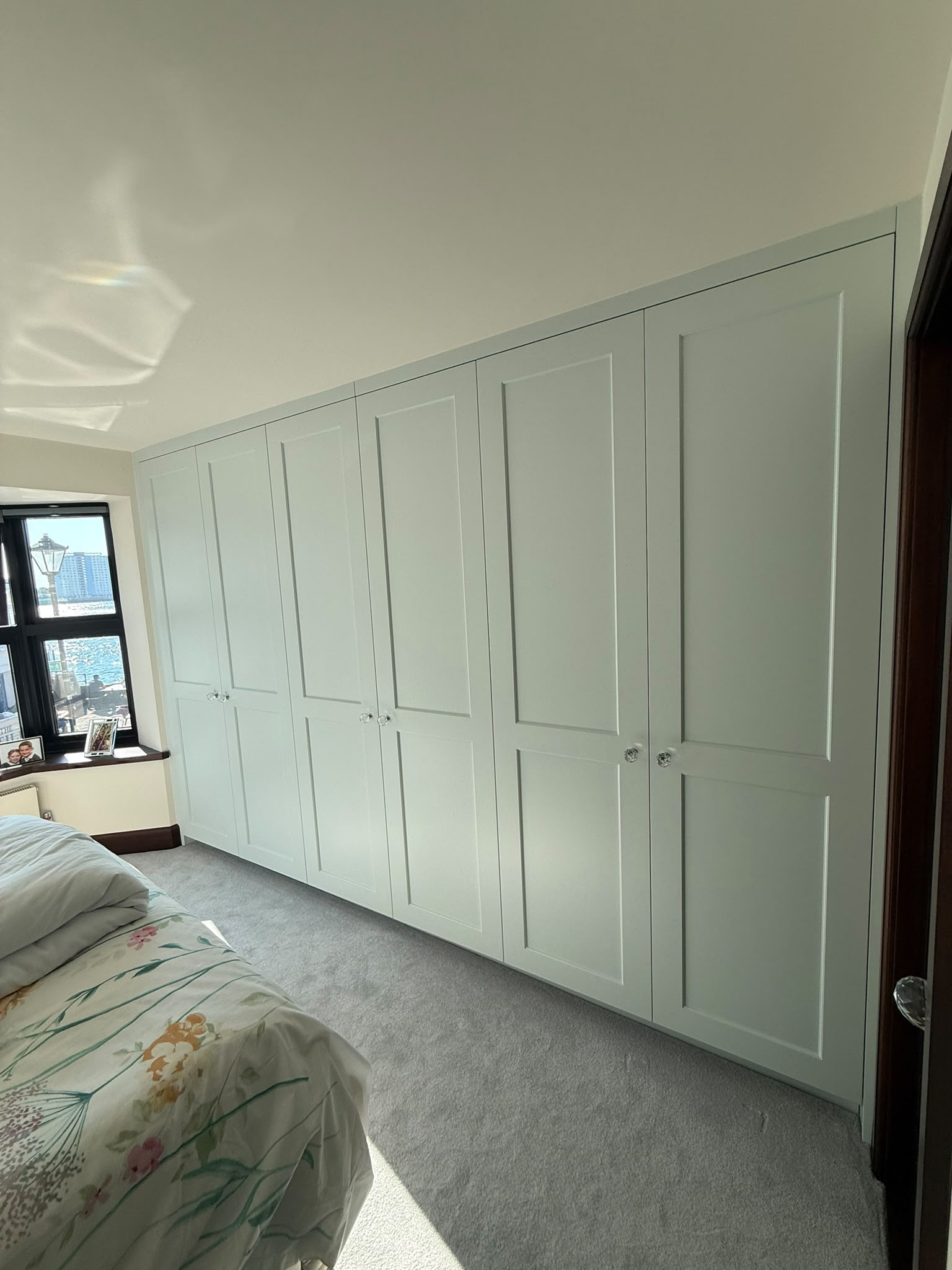
The honest answer to how do you make storage look part of the room is that it stops looking like storage at all. The best fitted storage reads as architecture rather than furniture. It shares the wall’s colour, sits flush with the floor and ceiling, and follows the shape of the room instead of interrupting it. A freestanding wardrobe or set of shelves, however nice, always looks like something that was placed in a room. Bespoke storage looks like it grew there.
If you’ve ever walked into a house and struggled to spot where the storage even is, that’s design working exactly as intended. Here’s how to get that effect in your own home, whether you’re planning a bedroom, living room or hallway.
Why off-the-shelf storage tends to stand out
Flat pack wardrobes and shelving units are built to a standard size, not to your room. That means gaps above, beside or below the unit where dust collects and the eye catches on the mismatch. Fitted furniture works with the architecture of your property, closing those gaps and using every centimetre from floor to ceiling. Nothing is left half finished, and there’s no awkward sliver of wall trying to explain itself.
This is really a question of proportion. A piece that stops short of the ceiling or doesn’t quite reach the skirting board reads as an object placed in the room. A piece that runs wall to wall and floor to ceiling reads as part of the room’s structure.
Match the colour and finish to the room, not just the furniture
One of the simplest ways to make storage disappear into a space is to stop treating it as a separate item. Choosing pieces that share a finish, tone or material with the rest of the room means the eye reads everything as one considered scheme rather than a cupboard that’s been bolted on afterwards.
This is also where a bigger interiors trend works in your favour. Colour drenching, where a single shade runs across walls, trim and joinery, has become one of the defining looks of 2026, and cabinetry is very much part of that picture. Painting a fitted cupboard the same colour as the surrounding wall, right down to the skirting, is one of the most effective tricks for making storage genuinely vanish into a room rather than sit on top of it.
You don’t have to go bold to get the benefit. A tonal scheme, where the storage is a shade or two darker or lighter than the wall, still reads as considered rather than added on. What matters is that the colour decision was made for the room as a whole, not for the cupboard on its own.
Skip the handles for a flush, uninterrupted look
Handles are often the first thing that gives storage away as furniture rather than architecture. Push to open doors and drawer fronts can become invisible storage, leaving a completely flat, uninterrupted run of panelling with nothing to catch the light or the eye. It’s a small detail, but it’s often the difference between a room that looks like it has cupboards in it and a room where the storage simply isn’t visible until you need it.
If you do want handles, choosing a single style throughout and keeping it understated has a similar effect. The goal either way is consistency. A mix of visible hinges, mismatched knobs and different door styles is what makes storage look bolted together rather than built in.
Let storage follow the shape of the room
Awkward spaces such as alcoves, chimney breasts and sloping ceilings are usually where freestanding furniture fails completely. Made to measure storage can do the opposite. Alcoves, chimney breasts, sloping ceilings and irregular wall layouts can all be incorporated into a custom design, turning what would otherwise be wasted or unusable space into storage that looks like it was always meant to be there.
This works especially well in period properties, where chimney breasts and uneven walls make standard furniture sizes almost impossible to use well. A cupboard built to fit the exact contour of the wall does more than add storage. It resolves an awkward feature of the room and makes the whole space feel more finished.
Use texture and material to add interest without adding clutter
Storage that blends in doesn’t have to mean storage that disappears into flat, featureless panels. Interior designers increasingly use texture, fluting, reeding or a fabric panel insert to give fitted storage real character while keeping it visually calm. A run of built-in cupboards can flow directly into open shelving or a window seat for a seamless look that still gives the room something to focus on.
The key is restraint. One textural or material choice, carried consistently across the whole run of storage, will always look more deliberate than several competing finishes fighting for attention.
Bespoke versus off-the-shelf: why fit matters more than style
It’s tempting to think this comes down to taste, but a lot of it is simply measurement. Off-the-shelf storage is built to standard dimensions, which means it’s very rarely a perfect fit for a real room with real skirting boards, sockets and slightly uneven walls. Bespoke storage is designed around your room’s exact measurements from the outset, so there’s no packing it out, no trimming it down and no gap to disguise afterwards.
That’s really what people mean when they say storage looks like it was always part of the house. It was designed for that specific wall, in that specific room, and it was never going to fit anywhere else.
Bring your storage into the room, not just into it
If you’re planning fitted furniture for a bedroom, living room or hallway, our bespoke fitted furniture and bespoke storage solutions services are designed around the exact shape of your room, not a standard size off a shelf. Get in touch for a consultation and we’ll talk through how to make your storage look like it was always meant to be there.