Skip to content


Fitted Wardrobes vs Bespoke Wardrobes: What’s the Real Difference?
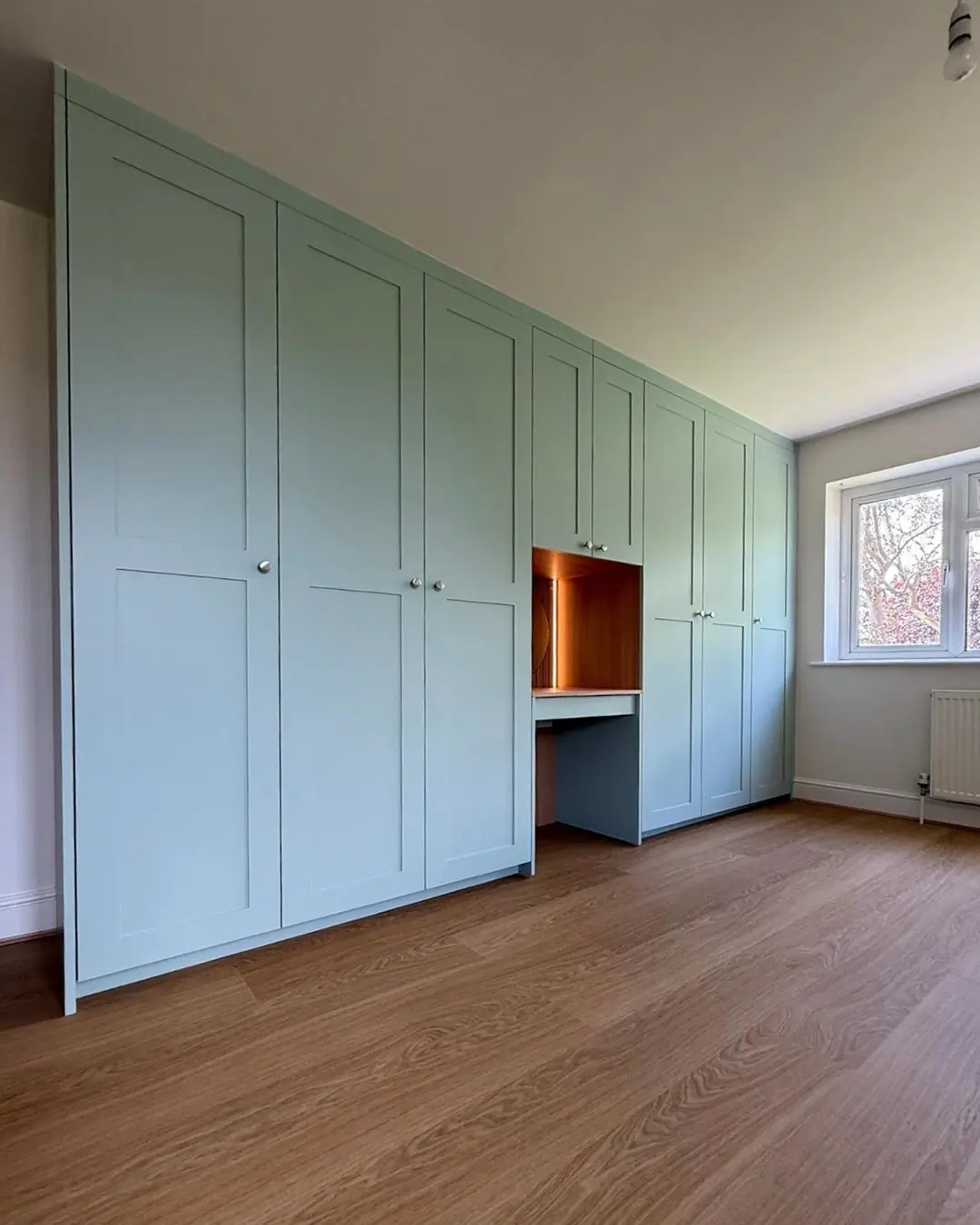
If you’re planning new wardrobe storage for a bedroom, you’ve probably come across the terms fitted wardrobes and bespoke wardrobes and wondered whether they actually mean different things. They do. The difference between fitted wardrobes and bespoke wardrobes comes down to how much of the design is created specifically for your room, rather than adapted from a standard range. A fitted wardrobe is built into your space and made to measure, but it’s usually assembled from a supplier’s existing carcase sizes, door styles and internal fittings. A bespoke wardrobe starts with a blank page. Every measurement, material and internal layout is designed from scratch around your room and how you actually live, rather than picked from a catalogue and trimmed to fit.
Both are permanently built into the room rather than freestanding, which is exactly where the confusion tends to start. Here’s what separates the two, what each one costs, and how to work out which is the better fit for your bedroom.
What is a fitted wardrobe?
A fitted wardrobe is a piece of storage furniture built directly into an alcove, wall or corner of a room, floor to ceiling, so there’s no gap above or to the side. Most fitted wardrobes are based on a manufacturer’s set carcase sizes, meaning the widths, heights and internal fittings come from an existing range. The company then scribes the panels to your walls and ceiling so the finished piece looks properly built in rather than dropped into place, and regular fitted wardrobes are typically based on set carcase sizes with a fairly limited range of internal layouts and finishes to choose from. This makes fitted wardrobes a quicker and generally more affordable route to built-in storage, and a good fit for a fairly regular room shape where you mainly need clean, efficient hanging and shelving.
What is a bespoke wardrobe?
A bespoke wardrobe is designed and built from scratch specifically for your room. There are no standard carcase widths, no fixed range of finishes and no compromise around awkward architecture. Sloped ceilings, chimney breasts, low eaves and odd-shaped alcoves, the sort of features common in period homes across West Sussex, are worked into the design rather than avoided. This gives a designer the freedom to solve architectural problems and tailor the internal layout, materials and finish entirely to your taste and the way you use the room, whether that’s hanging space for long coats, a pull-out ironing station or a dressing table built into the run of units.
It’s this scope for genuine customisation, right down to the last shelf and hinge, that sets a bespoke design apart from a fitted one built from a standard range. If you’d like to see the difference in practice, our gallery of completed bespoke fitted furniture shows a range of wardrobes we’ve designed and built for homes across the local area.
The key differences between fitted and bespoke wardrobes
Both fitted and bespoke wardrobes are built into the room, so on the surface they can look similar. The differences show up in how they’re designed, made and priced.
Design process
A fitted wardrobe starts with a catalogue. You choose from existing door styles, carcase widths and internal configurations, and the fitter adapts those standard components to your wall and ceiling lines. A bespoke wardrobe starts with your room. A designer measures the space, discusses how you actually use it, and draws a layout that exists nowhere else, built around your specific walls, not a template.
Materials and build quality
Fitted wardrobes span a wide quality range, from budget flat-pack style boards through to well-made panels in a limited set of finishes. Bespoke wardrobes are typically hand built using solid timber, real wood veneers or higher-grade board, with no restriction on colour, material or hardware. That’s part of why bespoke pieces tend to last longer and wear better day to day.
Handling awkward spaces
This is where the two options separate most clearly. A fitted wardrobe from a standard range can usually be scribed to fit a simple wall, but it will struggle with a steeply sloped ceiling, an off-square alcove or a chimney breast that interrupts the run. A bespoke design is built around exactly those obstacles from the outset, so there’s no wasted space and no awkward gap where a standard unit simply couldn’t reach.
Personalisation of the interior
Fitted wardrobes usually offer a set menu of internal options such as a fixed hanging rail, a bank of shelves or a set number of drawers. Bespoke wardrobes let you specify exactly what goes where, from integrated lighting and jewellery drawers to a hidden safe or a fold-out dressing table, designed around your actual wardrobe contents rather than a generic idea of what a bedroom needs.
Price and lead time
Fitted wardrobes are generally quicker to design and cheaper to buy, since much of the work is choosing from an existing range rather than creating something new. Bespoke wardrobes take longer to design and typically cost more, because every component is being made specifically for your room rather than pulled from stock. We’ve broken the numbers down in more detail below.
How much do fitted and bespoke wardrobes cost?
Price is usually the deciding factor, so it helps to have a rough figure in mind before you start getting quotes. According to UK trade site Checkatrade, a standard 3-door fitted wardrobe with hinged doors costs around £3,250 on average, rising to roughly £3,700 for a 3-section wardrobe with sliding doors, with carpenter labour costing around £270 a day on top of materials. Wider runs, corner units and non-standard shapes push the price up further.
Bespoke wardrobes tend to sit above these figures because the price reflects design time, made-to-measure materials and one-off joinery rather than components pulled from a standard range. As a comparison, Checkatrade’s guide to walk-in wardrobes, which are almost always designed on a bespoke basis, puts the average project cost at around £8,550, reflecting the extra design and craftsmanship involved. The exact figure for any bespoke wardrobe will depend on the size of the room, the materials chosen and how much internal customisation you want, so it’s always worth getting a fixed quote after a proper design consultation rather than working from a generic average.
Which is right for your bedroom?
There’s no universally correct answer here, it depends on your room and what you actually want from the space.
- A regular, box-shaped room where you mainly need clean hanging and shelving space is often well served by a fitted wardrobe, especially if budget and speed matter most.
- A room with sloped ceilings, alcoves, a chimney breast or other period features usually calls for a bespoke design, since a standard fitted range simply won’t reach into every corner.
- If your storage needs go beyond hanging clothes, think shoes, bags, jewellery, a dressing area or integrated lighting, a bespoke layout gives you the freedom to plan around exactly what you own.
- If you want the wardrobe to last as a long-term feature of the home rather than being replaced in a few years, the quality and personalisation of a bespoke build is usually the better investment.
Many homeowners we work with in West Sussex come to us after finding that off-the-shelf fitted options couldn’t cope with an awkward loft conversion or period bedroom. If that sounds familiar, our bespoke fitted furniture service and bespoke storage solutions are both designed around exactly this kind of space, and we also handle trickier areas like under stairs storage if you’re looking to make use of every part of the house, not just the bedroom.
Questions to ask a wardrobe company before you commit
Because the terms fitted and bespoke are used loosely across the industry, it’s worth asking a few direct questions before signing off on a quote.
- Is the design based on your exact room measurements, or adapted from a standard range of carcase sizes?
- How will the design handle any sloped ceilings, alcoves or chimney breasts in the room?
- What board thickness and materials are being used, and are they moisture resistant where needed?
- Is the internal layout, drawers, shelving, hanging height, something you can adjust to suit what you actually store?
- Does the quote include design, manufacture and installation, or are any of those handled by a separate subcontractor?
If you’d like a straight answer to any of these for your own bedroom, book a consultation and we’ll come and talk through the room with you before you commit to anything.